
Are you looking for a sturdy packaging solution that can be easily printed and coated with different materials? Unique Custom Packaging, one of the most popular packaging company in USA, provides you with excellent solutions in the form of custom rigid paper boxes. Unlike simple packaging, we craft these rigid boxes from thick paperboard, typically ranging from 36 to 120 pt. Whether it is the storage or shipping of products, you can reliably use our boxes to ensure your brand’s professionalism and grab more sales. Besides box durability, we also pay immense heed to creating unique and luxury box designs. Contact us right now if you want to stand out with visually appealing, strong, and sturdy rigid paper boxes.
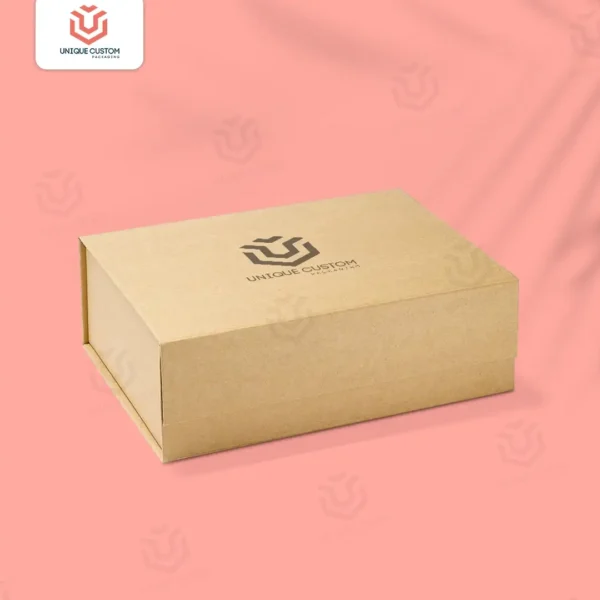
We use top-quality, eco-friendly materials to deliver packaging that is both protective and visually appealing.


| Box Style | Loading... |
|---|---|
| Dimension (L + W + H) | All Custom Sizes & Shapes |
| Quantities | No Minimum Order Required |
| Paper Stock | 10pt to 28pt (60lb to 400lb) Eco-Friendly Kraft, E-flute Corrugated, Bux Board, Cardstock |
| Printing | No Printing, CMYK, CMYK + 1 PMS color, CMYK + 2 PMS colors |
| Finishing | Gloss Lamination, Matte Lamination, Gloss AQ, Gloss UV, Matte UV, Spot UV, Embossing, Foiling |
| Included Options | Die Cutting, Gluing, Scored, Perforation |
| Additional Options | Eco-Friendly, Recycled Boxes, Biodegradable |
| Proof | Flat View, 3D Mock-up, Physical Sampling (On request) |
| Turnaround | 8–10 Business Days, RUSH |
| Shipping | FLAT |
| Thickness of Packaging Material | GSM Weight |
|---|---|
| 13 point Pulp | 200 gsm |
| 14 point Uncoated | 270 gsm |
| 16 point C2S / Solid Bleached Sulfate (SBS)* | 350 gsm |
| 18 point C2S | 400 gsm |
| 24 point Uncoated | 405 gsm |
| 24 point C2S / Solid Bleached Sulfate (SBS)* | 460 gsm |
| 40 point Cotton | 600 gsm |
Premium rigid boxes are no longer just physical containers used for holding products. In modern commerce, they function as a strategic branding asset that directly influences how customers perceive value, quality, and trust. The shift from functional packaging to experience-driven packaging has made rigid boxes one of the most important tools in luxury branding.
When a customer interacts with a product for the first time, the packaging is the first physical touchpoint. This moment forms an immediate psychological judgment. If the packaging feels cheap, thin, or unstable, the brain automatically assigns lower value to the product inside. On the other hand, if the packaging feels solid, heavy, and refined, the perceived value increases instantly—even before the product is revealed.
This is where premium rigid boxes outperform all other packaging types. Their structural density, weight, finishing quality, and unboxing mechanics are intentionally designed to trigger a perception of luxury and trust.
Unlike folding cartons that rely on thin paperboard and collapsible structure, rigid boxes are engineered using high-density chipboard that maintains permanent shape. This gives them a physical presence that communicates durability and premium positioning without any verbal explanation.
In high-end industries such as cosmetics, electronics, jewelry, fashion, and corporate gifting, rigid boxes are not optional—they are expected. Customers buying premium products expect premium packaging as part of the experience.
Structural Science Behind Rigid Box Construction
To understand why rigid boxes feel premium, we must examine their internal construction.
The core of every rigid box is made from greyboard, also known as chipboard. This material is produced by compressing recycled paper fibers under high pressure until it forms a dense, hard sheet. Unlike corrugated board, which contains air gaps and fluted layers, greyboard is solid and compact.
This density is what gives rigid boxes their strength. Even thin rigid boards feel significantly heavier and more stable than standard cardboard.
The thickness of greyboard varies depending on application:
Light luxury packaging: thinner board for cosmetics or small items
Medium premium packaging: standard thickness for retail goods
High luxury packaging: thick multi-layer board for jewelry, watches, and electronics
Once the board is selected, it is cut into precise structural components using die-cutting machines. These components form the skeleton of the box.
However, unlike folding cartons, rigid boxes do not rely on folding lines. Instead, they are assembled into fixed 3D structures using adhesives and then reinforced with outer wrapping materials.
This creates a two-layer system:
Internal structural core (strength and shape)
External wrapping layer (visual identity and branding)
This separation of function is what allows rigid boxes to achieve both durability and aesthetics simultaneously.
The Psychological Engineering of Luxury Packaging
Premium rigid boxes are not just physical objects—they are psychological tools.
Every design element in rigid packaging is engineered to influence human perception subconsciously.
One of the strongest psychological triggers is weight perception. When a customer holds a rigid box, the density creates an assumption of value. Heavier packaging is associated with more expensive and higher-quality products. This is not logic—it is cognitive bias formed through repeated consumer experience.
Another key factor is resistance-based interaction. When opening a rigid box, especially magnetic or drawer-style designs, there is controlled resistance. This resistance builds anticipation. The brain interprets anticipation as value increase, making the reveal moment more satisfying.
Surface texture also plays a major role. Soft-touch coatings, matte finishes, and embossed surfaces activate sensory neurons that increase emotional engagement. Smooth but slightly resistant textures are often perceived as more premium than glossy or rough finishes.
Color psychology is another layer. Luxury packaging often uses muted tones, monochromatic schemes, or deep rich colors because they signal sophistication and exclusivity. Bright or overly saturated colors are rarely used in premium rigid packaging unless they are part of brand identity.
Finally, spatial design inside the box contributes to psychological impact. Products that are centered, elevated, or surrounded by inserts feel more valuable than loosely placed items. This is why foam inserts, velvet beds, and molded trays are widely used in rigid packaging.
Material Selection and Its Impact on Brand Positioning
Material selection is one of the most important decisions in rigid box production because it directly affects perception, durability, and brand identity.
The structural core, greyboard, determines strength. However, the outer layer determines emotional response.
There are several categories of wrapping materials used in premium rigid boxes:
Coated Art Paper
This is used when brands require high-quality printing and sharp visual branding. It allows precise reproduction of logos, gradients, and imagery. However, it is often enhanced with lamination to improve durability.
Kraft Paper
Kraft paper gives a natural, eco-friendly appearance. It is widely used by brands that want to communicate sustainability, organic identity, or minimalism. It is less about luxury shine and more about authenticity.
Textured Specialty Paper
This category includes linen texture, leather texture, and fabric-like surfaces. These materials are used when brands want to create tactile luxury without relying on gloss or metallic effects.
Fabric Wrapping
Fabric-based wrapping is used in ultra-premium packaging. It introduces softness, depth, and a handcrafted feel. It is commonly used for jewelry, watches, and collector items.
Laminated Surfaces
Matte, gloss, and soft-touch laminations are used to protect printed surfaces and enhance visual appeal. Soft-touch lamination is especially popular in luxury packaging because it creates a velvety feel that enhances emotional engagement.
Each material choice directly influences how the product is positioned in the market.
Structural Variations and Their Functional Purpose
Rigid boxes come in multiple structural formats, each designed to create a different user experience.
Two-piece boxes are simple but powerful. They create a slow reveal effect, which increases anticipation. The lid removal process is controlled, not abrupt, which enhances emotional engagement.
Magnetic closure boxes introduce a modern sensory experience. The magnetic snap closure creates a subtle sound and tactile response that signals precision and quality.
Drawer-style boxes add interaction. Instead of lifting a lid, the user pulls a tray, creating a layered discovery experience. This is particularly effective for product sets or multi-item packaging.
Hinged lid boxes provide continuity. Because the lid is attached, the interaction feels stable and structured. This format is often used for premium presentations and corporate gifting.
Shoulder neck boxes are structurally complex. The internal elevation creates depth and separation, which enhances visual luxury. This type of structure is often reserved for high-value items where presentation is critical.
Manufacturing Precision and Quality Control Logic
Rigid box manufacturing is not a simple assembly process. It is a controlled engineering workflow that requires precision at every stage.
The process begins with structural engineering, where dimensions are calculated based on product size, weight, and positioning requirements.
Die-cutting follows, where greyboard sheets are cut with millimeter accuracy. Any deviation here affects final alignment.
Assembly requires adhesive application under controlled pressure. If pressure is uneven, structural imbalance occurs.
Wrapping is one of the most sensitive stages. Even slight misalignment can create visible imperfections that reduce luxury perception.
Finishing techniques such as foil stamping and embossing require exact positioning because they highlight branding elements. A misaligned foil stamp immediately reduces perceived quality.
Quality control is not just visual inspection—it includes structural testing, alignment verification, and durability checks.
Customization is the real reason premium rigid boxes dominate the luxury packaging industry. At a basic level, every box performs the same function—holding a product. But in premium packaging, the box itself becomes a controlled branding environment where every millimeter is designed to influence perception.
Unlike mass packaging formats, rigid boxes are not limited by structural simplicity. They allow complete freedom in dimensions, internal layouts, external finishes, and interactive features. This flexibility is what allows brands to build identity through packaging instead of just printing a logo.
The most important aspect of customization is not decoration—it is intention. Every design decision must answer a psychological question: what should the customer feel at each stage of interaction?
A rigid box is typically customized across five main dimensions: structure, surface, interior design, closure system, and finishing enhancements.
Structure determines how the customer physically interacts with the product. Surface determines how the box is visually interpreted. Interior design determines how the product is revealed. Closure systems determine anticipation and interaction timing. Finishing enhancements determine emotional impact and memorability.
When these five elements are aligned, packaging becomes an experience rather than an object.
Structural Customization and Experience Control
Structural customization is the foundation of rigid box design. It defines how a user opens, handles, and discovers the product.
For example, a two-piece rigid box creates a slow reveal experience. The lid must be lifted vertically, which introduces controlled resistance. This simple motion increases anticipation because the product is not immediately visible.
Magnetic closure boxes, on the other hand, introduce a sensory feedback loop. The magnetic snap creates a moment of closure satisfaction, which the brain interprets as precision and quality. This subtle detail significantly increases perceived value.
Drawer-style boxes introduce curiosity-driven interaction. Instead of lifting a lid, the user pulls a compartment outward. This horizontal motion creates a gradual reveal, which psychologically extends the moment of discovery.
Shoulder neck boxes introduce depth layering. The product appears nested within a structured cavity, creating a visual hierarchy that enhances exclusivity.
Each structure is not just functional—it is behavioral design. It controls how long a user interacts with packaging and how much emotional weight is assigned to the product inside.
Surface Design and Visual Identity Engineering
The outer surface of a rigid box is where branding psychology becomes visible. This is the first layer of communication between product and customer.
Surface design is not only about aesthetics—it is about perception management. Every texture, color, and finish sends a message.
Matte surfaces are often associated with sophistication and minimalism. They absorb light instead of reflecting it, creating a calm and controlled visual tone.
Gloss surfaces reflect light, making colors appear more vibrant and attention-grabbing. These are often used when brands want strong visual impact rather than subtle luxury.
Soft-touch coatings add a tactile dimension that is critical in luxury packaging. The surface feels almost velvet-like, which creates emotional satisfaction through touch.
Textured papers introduce physical complexity. When a customer runs their fingers over the surface, the micro-variation in texture creates subconscious engagement. This is particularly effective in high-end gifting products.
Surface design also controls brand recognition. In luxury markets, consistency is more important than complexity. A consistent visual language across packaging builds long-term identity memory.
Interior Design and Product Presentation Psychology
The inside of a rigid box is just as important as the outside. In fact, interior design often has a stronger psychological impact because it controls the moment of reveal.
When a customer opens a box, their attention shifts instantly from expectation to discovery. This transition must be carefully designed.
Interior customization includes structural inserts, color contrast, layering systems, and product positioning.
Foam inserts are commonly used to secure products. However, beyond protection, they also create visual framing. A product placed in a precisely cut foam cavity appears more valuable because it is visually isolated and highlighted.
Velvet or fabric linings are used in ultra-premium packaging. These materials reduce visual noise and create a soft background that enhances product focus.
Molded trays are used for multi-component packaging. They organize products into compartments, creating structured discovery paths.
Color contrast inside the box also plays a major role. A dark interior with a light product increases focus. A light interior with a dark product creates contrast depth. These choices are not random—they are designed to guide visual attention.
Interior design is where packaging becomes storytelling. It dictates how the product is revealed, in what order it is seen, and how it is emotionally interpreted.
Closure Systems and Interaction Engineering
Closure systems in rigid boxes are not just mechanical elements—they are emotional triggers.
The most common closure types include magnetic flaps, ribbon ties, tuck-in lids, and sleeve friction systems.
Magnetic closures are widely used in premium packaging because they create a smooth and controlled interaction. The closing motion feels precise, and the magnetic snap provides sensory feedback.
Ribbon closures introduce a ceremonial element. The act of untying a ribbon slows down the unboxing process, increasing anticipation and emotional engagement.
Tuck-in closures are more traditional but still effective when combined with high-end materials. They rely on friction and structural fit rather than mechanical systems.
Sleeve-based closures, where one layer slides over another, create friction-based interaction. This increases perceived craftsmanship because it feels manually engineered.
Closure systems directly influence how long a customer interacts with packaging. Longer interaction time generally leads to stronger emotional memory.
Finishing Techniques and Luxury Perception Layering
Finishing is the final stage of rigid box production, but it has one of the highest impacts on perceived value.
Foil stamping is one of the most powerful luxury indicators. Metallic gold, silver, or holographic foils reflect light in a controlled way, highlighting logos and design elements.
Embossing raises certain areas of the surface, creating a 3D tactile effect. This makes branding elements physically noticeable, not just visually present.
Debossing is the opposite—it creates recessed impressions that add depth and subtlety.
Spot UV coating applies gloss selectively on specific areas. This contrast between matte and gloss creates visual hierarchy and focus.
Soft-touch lamination adds a smooth, almost suede-like texture that enhances emotional comfort during handling.
These finishing techniques are often combined to create multi-layered sensory experiences. For example, a matte box with gold foil and embossed logo creates three levels of perception: visual contrast, metallic highlight, and tactile depth.
Industry Applications and Market Positioning
Rigid boxes are used across multiple industries, but their role changes depending on product type and brand strategy.
In cosmetics, rigid boxes are used to communicate purity, luxury, and elegance. Packaging often includes soft tones, delicate textures, and minimalistic design.
In electronics, rigid boxes emphasize precision and technological sophistication. Clean geometry and structured interiors are commonly used.
In jewelry, packaging focuses on emotional value. The box is designed to enhance the symbolic importance of the item inside.
In fashion, rigid boxes are used for premium apparel and accessories. They reinforce brand identity and exclusivity.
In corporate gifting, rigid boxes communicate professionalism and status. They are often used in executive-level presentations.
In food and confectionery, rigid boxes transform consumables into giftable luxury items.
Each industry uses rigid packaging differently, but the core objective remains the same: elevate perceived value.
Customer Experience Engineering in Packaging
Modern packaging design is heavily influenced by experience engineering. This means every stage of interaction is intentionally designed.
The experience begins before the box is opened. Weight, texture, and visual design create expectations.
The opening phase builds anticipation. Controlled resistance and structural interaction increase emotional engagement.
The reveal phase delivers satisfaction. The product is presented in a structured and visually appealing way.
The retention phase determines whether the customer keeps the box. High-quality rigid boxes are often reused, extending brand exposure.
This multi-stage experience is what differentiates rigid packaging from standard packaging.
One of the most misunderstood aspects of premium rigid boxes is their pricing structure. Many people assume the cost is purely based on material thickness or printing complexity, but in reality, pricing is driven by a combination of engineering, labor intensity, customization depth, and perceived brand value enhancement.
Rigid boxes sit in a unique category where packaging is not evaluated as a cost center alone, but as a value multiplier. In luxury industries, packaging can directly influence how much a customer is willing to pay for a product. This means the cost of packaging often becomes part of the pricing strategy rather than just an operational expense.
At a basic production level, rigid box pricing is influenced by board thickness, wrapping material quality, finishing complexity, and structural design. However, as packaging moves into premium and luxury tiers, the pricing logic shifts toward experience engineering.
For example, a simple two-piece rigid box with basic printing might have a relatively low production cost compared to a magnetic closure box with soft-touch lamination, foil stamping, embossed branding, and custom foam interiors. But the perceived value difference between these two is not linear—it is exponential.
This is because human perception does not evaluate packaging logically. Instead, it interprets visual and tactile cues as signals of brand status. A small increase in finishing complexity can create a disproportionately large increase in perceived product value.
Luxury brands leverage this psychology intentionally. They understand that packaging is not just protection—it is positioning. A product placed in a premium rigid box can often be sold at a significantly higher price point compared to the same product in standard packaging.
This is why rigid boxes are often considered an investment rather than an expense in high-end industries.
Luxury Branding Strategy Through Packaging Systems
Rigid boxes play a central role in luxury branding because they act as physical brand ambassadors. Unlike digital branding, which is temporary and screen-based, packaging is tangible and permanent.
A strong rigid box design communicates brand identity without requiring explanation. The moment a customer sees and holds the box, they form an immediate judgment about the brand’s position in the market.
Luxury branding through rigid packaging relies heavily on consistency. High-end brands rarely change their packaging design drastically. Instead, they refine it over time. This creates visual familiarity, which strengthens brand memory.
Another key aspect is restraint. Luxury packaging often avoids excessive visual noise. Instead of overcrowding the surface with graphics, it uses minimal design elements combined with high-quality materials. This controlled simplicity signals confidence and exclusivity.
Color psychology is also strategically used. Deep blacks, muted golds, soft whites, and neutral tones are commonly used in premium packaging because they convey sophistication and timelessness.
Typography in luxury rigid packaging is equally important. Serif fonts, spaced lettering, and minimal text layouts are often used to communicate elegance and authority.
When all these elements are combined, packaging becomes a silent brand language that communicates value before the product is even considered.
Global Market Trends in Premium Rigid Packaging
The global demand for rigid boxes has been steadily increasing due to the rise of e-commerce, luxury retail expansion, and consumer experience expectations.
One major trend is the shift toward unboxing culture. Social media platforms have amplified the importance of packaging because consumers now share unboxing experiences publicly. This has transformed packaging into a marketing tool.
Brands are now designing rigid boxes not just for individual customers but also for visual impact in digital environments. Packaging must look impressive on camera, not just in hand.
Another major trend is personalization. Modern consumers expect a sense of individuality in packaging. This has led to the rise of customized rigid boxes for limited editions, seasonal collections, and special releases.
Minimalist luxury is also becoming dominant. Instead of overly decorative packaging, brands are focusing on clean designs with high material quality. This reflects a shift from visual complexity to material sophistication.
Sustainability is another global trend shaping rigid box production. Consumers are increasingly aware of environmental impact, and brands are responding with recyclable materials, reduced plastic usage, and eco-friendly inks.
Even luxury brands are integrating sustainability into rigid packaging without compromising aesthetics. This balance between luxury and responsibility is becoming a defining factor in modern packaging design.
Sustainability and Responsible Packaging Engineering
Sustainability in rigid box production is no longer optional. It is becoming a core requirement in global packaging standards.
Rigid boxes traditionally use paper-based materials, which already makes them more environmentally friendly compared to plastic packaging. However, modern sustainability standards go beyond material choice.
Recyclability is a key factor. High-quality greyboard can be recycled and reused in paper production cycles, reducing environmental waste.
Water-based adhesives are increasingly used instead of chemical-based glues. These adhesives reduce environmental toxicity while maintaining structural strength.
Soy-based inks are replacing petroleum-based inks in printing processes. These inks are biodegradable and reduce environmental impact without compromising print quality.
Another important sustainability approach is design efficiency. This involves reducing unnecessary material usage while maintaining structural integrity. Smart design engineering allows boxes to use less board without weakening durability.
Reusable packaging is also gaining importance. Many rigid boxes are designed to be kept by customers for storage or personal use. This extends the lifecycle of the packaging beyond its original purpose.
Sustainability is not just an environmental concern—it is also a branding advantage. Consumers often associate eco-friendly packaging with ethical business practices, which increases brand trust.
Consumer Behavior and Packaging Influence
Understanding consumer behavior is essential in premium packaging design because rigid boxes are deeply tied to emotional decision-making.
Consumers do not evaluate packaging objectively. Instead, they respond to subconscious cues such as weight, texture, color, and structure.
When a consumer holds a rigid box, the brain immediately assigns value based on sensory input. A heavier box is perceived as more expensive. A smoother surface is perceived as more refined. A controlled opening mechanism is perceived as more premium.
These responses occur within seconds and often influence purchase satisfaction more than the actual product performance.
Another important behavioral factor is anticipation. Humans naturally respond to delayed gratification. Rigid boxes that slow down the unboxing process increase emotional engagement.
This is why layered packaging, magnetic closures, and drawer-style structures are so effective. They extend the moment of discovery.
Memory retention is also influenced by packaging. A strong unboxing experience creates a lasting memory association between the product and the brand. This increases the likelihood of repeat purchases and word-of-mouth recommendations.
In essence, rigid boxes do not just package products—they shape consumer memory.
Conversion Rate Impact of Premium Packaging
In retail and e-commerce environments, packaging directly affects conversion rates. A product presented in premium rigid packaging often achieves higher perceived value, which can justify higher pricing.
Customers are more likely to trust products that are packaged professionally. This trust reduces hesitation during purchase decisions.
In online retail, where customers cannot physically interact with products before buying, packaging visuals play a critical role in conversion optimization. High-quality rigid box images increase click-through rates and engagement.
Unboxing experience also influences post-purchase satisfaction. A strong unboxing experience reduces return rates and increases positive reviews.
This creates a feedback loop where better packaging leads to better customer perception, which leads to better business performance.
Psychological Positioning of Luxury Through Packaging
Luxury is not defined by price alone—it is defined by perception. Rigid boxes are one of the strongest tools for creating luxury perception.
Luxury packaging relies on three core psychological principles:
Scarcity perception: Limited or premium packaging suggests exclusivity.
Effort perception: Complex packaging design suggests craftsmanship.
Sensory depth: Multiple textures and layers suggest richness.
When these three elements are combined, the brain interprets the product as high-value even before evaluation.
This is why rigid boxes are widely used in luxury branding—they create an environment where perceived value is naturally elevated.
The future of premium rigid boxes is closely tied to the evolution of branding, consumer psychology, and global retail transformation. Packaging is no longer a static physical requirement—it is becoming an adaptive communication system that reflects brand identity, consumer expectations, and technological integration.
One of the strongest future directions is the continued rise of experience-driven packaging. Customers are no longer satisfied with simple protection or visual appeal. They expect packaging to deliver a multi-sensory journey that includes touch, sound, motion, and emotional engagement. Rigid boxes already lead this category, but future designs will push this further through interactive structures, layered reveals, and enhanced material engineering.
Another major direction is personalization at scale. Instead of producing identical packaging for mass distribution, brands are increasingly moving toward segmented packaging strategies. This means packaging variations based on customer type, region, product tier, or even purchase behavior. Rigid boxes are particularly suitable for this because their structure allows high customization without compromising strength or design integrity.
Digital integration is also shaping the future of rigid packaging. QR codes, NFC chips, and augmented reality markers are being embedded into packaging surfaces. This transforms rigid boxes into digital gateways, allowing customers to access product stories, authentication systems, or brand experiences through their packaging.
In luxury industries, this hybrid physical-digital experience is becoming increasingly important because it extends brand engagement beyond the physical product.
Smart Packaging Evolution and Technology Integration
Rigid boxes are also evolving through the integration of smart packaging technologies. While traditional packaging focuses on structure and design, smart packaging introduces functionality and interaction.
One emerging trend is authentication-based packaging. Luxury products are often counterfeited, and rigid boxes are now being used as part of anti-counterfeit systems. Embedded QR codes, serial verification, and digital tracking systems help confirm product authenticity.
Another innovation is sensory-trigger packaging. This includes mechanisms that respond to opening motion, such as magnetic feedback systems, layered reveals, or controlled resistance structures that enhance user engagement.
Temperature-sensitive coatings and reactive inks are also being explored in advanced packaging systems. These materials change appearance based on environmental conditions, creating dynamic visual effects that increase engagement.
Although these technologies are still evolving, rigid boxes provide the ideal physical platform for their implementation due to their structural stability and surface adaptability.
Advanced Branding Framework Using Rigid Packaging
Premium rigid boxes are not just packaging components—they are part of a complete branding framework. Successful luxury brands treat packaging as an extension of identity rather than a separate operational element.
A strong branding framework using rigid boxes is built on three layers:
The first layer is identity communication. This includes logos, typography, color schemes, and structural style. These elements must remain consistent across all packaging formats to create recognition.
The second layer is emotional positioning. This involves how the packaging makes the customer feel during interaction. Luxury brands aim to create feelings of exclusivity, anticipation, and satisfaction.
The third layer is memory creation. Packaging must be memorable enough that customers associate the experience with the brand long after purchase. This is achieved through tactile quality, structured unboxing, and visual distinction.
When these three layers are aligned, packaging becomes a long-term brand asset rather than a short-term product container.
The Role of Minimalism in High-End Packaging Design
One of the most important shifts in premium packaging design is the move toward minimalism. However, minimalism in rigid boxes does not mean simplicity in quality. It means controlled design with maximum material impact.
Instead of using excessive graphics or decorative elements, modern luxury packaging focuses on:
Clean surfaces
Precise alignment
High-quality materials
Controlled color palettes
Subtle branding placement
This design philosophy is based on the idea that confidence in a brand is shown through restraint. Over-designed packaging often signals insecurity or lack of clarity in brand identity.
Minimalist rigid boxes rely heavily on material quality to communicate luxury. A simple black box with soft-touch coating and embossed logo can feel significantly more premium than a highly decorated printed box.
This shift toward minimalism reflects broader consumer preferences for authenticity and sophistication over visual overload.
Emotional Design and Sensory Engineering in Packaging
Emotional design is one of the strongest forces behind premium rigid box success. Every element of packaging is designed to trigger emotional responses at different stages of interaction.
The first emotional trigger is anticipation. Before the box is opened, the customer evaluates its weight, texture, and visual structure. This creates expectation.
The second trigger is engagement. As the box is opened, resistance, motion, and sound contribute to sensory involvement. Magnetic closures, sliding drawers, and layered structures all increase engagement time.
The third trigger is reward. When the product is revealed, the presentation must justify the anticipation. Proper alignment, interior design, and product framing all contribute to satisfaction.
The final trigger is memory formation. A strong unboxing experience creates long-term recall, which strengthens brand association.
Rigid boxes are uniquely positioned to control all four emotional stages, which is why they are dominant in luxury packaging systems.
Industrial Standardization vs. Custom Luxury Production
Rigid box production exists in two major categories: standardized production and custom luxury manufacturing.
Standardized production focuses on efficiency, consistency, and cost control. These boxes are used for mass-market products where branding is secondary to function.
Custom luxury production, however, is entirely different. It focuses on uniqueness, exclusivity, and brand storytelling. Every detail is customized, from structural design to finishing technique.
Luxury rigid boxes often require manual intervention at multiple stages of production. This includes wrapping alignment, finishing application, and quality inspection. The human element ensures precision that machines alone cannot achieve.
This distinction is important because premium rigid packaging is not just about manufacturing capability—it is about craftsmanship.
Economic Value of Premium Packaging in Business Strategy
Rigid boxes directly influence business economics in multiple ways.
First, they increase perceived product value. A higher perceived value allows brands to position products at higher price points without changing actual product cost.
Second, they improve conversion rates. In retail environments, better packaging leads to stronger purchase decisions because customers associate packaging quality with product reliability.
Third, they reduce return rates. Products presented in premium packaging are perceived as higher quality, reducing post-purchase dissatisfaction.
Fourth, they enhance brand loyalty. Customers who experience high-quality packaging are more likely to repurchase and recommend the brand.
These factors combine to make rigid boxes not just a packaging cost, but a revenue-influencing asset.
Long-Term Brand Equity Built Through Packaging
Brand equity is the long-term value a brand builds through customer perception, trust, and recognition. Packaging plays a direct role in this process.
Rigid boxes contribute to brand equity in three ways:
Consistency: Repeated exposure to consistent packaging builds recognition.
Quality association: High-quality packaging leads to long-term perception of product excellence.
Emotional memory: Strong unboxing experiences create lasting emotional associations.
Over time, these factors accumulate and strengthen brand positioning in competitive markets.
In luxury industries, packaging is often one of the most visible and consistent brand touchpoints, making it a key driver of long-term equity.
Final Conclusion – Why Premium Rigid Boxes Dominate Luxury Packaging
Premium rigid boxes dominate the luxury packaging industry because they combine structural engineering, aesthetic design, psychological influence, and brand storytelling into a single system.
They are not simply containers. They are experience frameworks that shape how customers perceive, interact with, and remember a product.
Their strength lies in their ability to control perception at every stage:
Before opening – they create expectation
During opening – they create engagement
At reveal – they create satisfaction
After use – they create memory
This complete lifecycle influence is what makes rigid boxes irreplaceable in premium branding.
As global markets continue to evolve, packaging will become even more important in defining product value. Rigid boxes are already positioned at the center of this transformation, and their role will only expand as brands focus more on experience-driven commerce.
In essence, premium rigid boxes are not just packaging solutions—they are strategic branding instruments that transform ordinary products into premium experiences.

Precise image transfer for vibrant prints at a low cost.

Flexible and fast printing without requiring plates.

Glossy finish with enhanced durability and appeal.

Accurate color matching for consistent branding.

Premium material providing strength and elegance.

Strong and durable material ideal for shipping.

Lightweight and rigid for versatile packaging needs.

Eco-friendly and rigid with a natural and rustic feel.

Adds a metallic finish for a premium look.

Luxurious gold finish perfect for upscale packaging.

Creates raised textures for an elegant touch.

Sunken designs for a subtle yet impactful finish.

Precise alignment for intricate designs.

Blend of embossing and foil stamping for depth.

Transparent windows to display the product.

Eco-friendly coating for a smooth finish.

Shiny protective layer for added durability.

Glossy accents on selected areas.

Velvety feel for a luxurious presentation.

Protective finish with enhanced durability.

Smooth and polished finish for lasting appeal.

Scratch-resistant coating for better durability.