Food packaging is about more than simply wrapping products. It plays an important role in food presentation, handling, customer experience, and brand recognition. Whether you operate a bakery, restaurant, cafe, burger shop, sandwich business, or takeaway service, choosing the right wrapping paper can make everyday packaging more practical and professional.
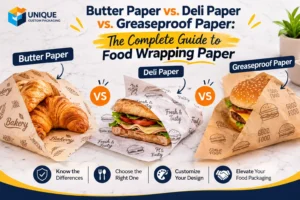
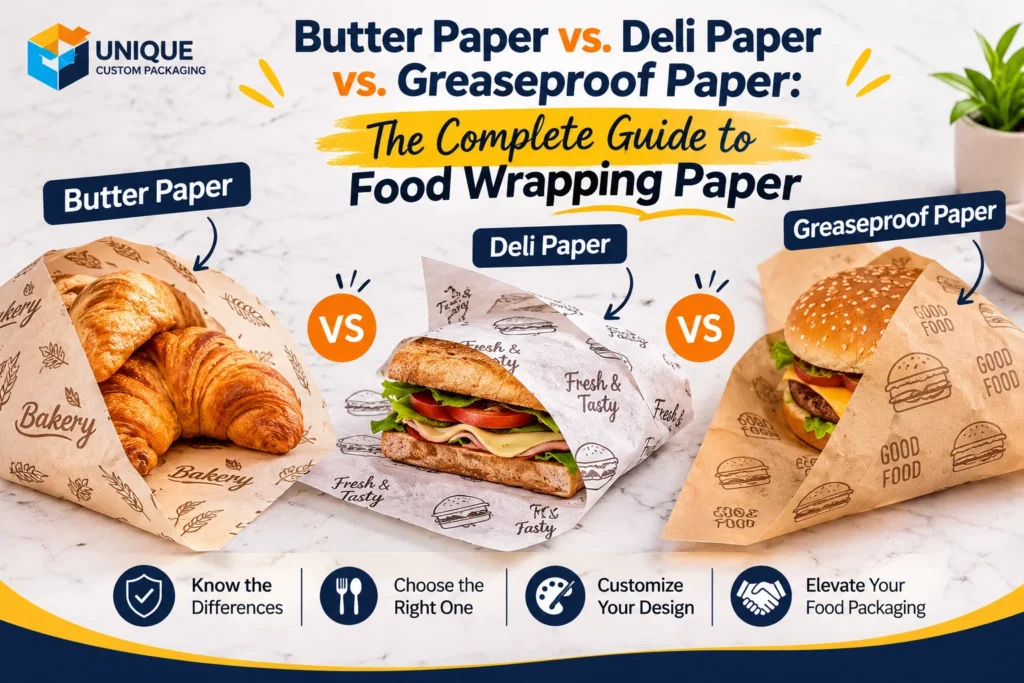
Butter paper, deli paper, and greaseproof paper are three popular paper options used across the food industry. Although people sometimes use these names interchangeably, they are not necessarily the same product. Each type can have different material properties, coatings, and intended applications.
Some food businesses need paper for wrapping sandwiches, while others require suitable sheets for lining serving baskets, packaging bakery products, or handling greasy takeaway foods. Understanding the differences can help you select the right packaging for your business.
In this comprehensive guide, we will explore butter paper, deli paper, and greaseproof paper, explain their common uses, compare their features, and discuss how custom printing can turn ordinary food wrapping into branded packaging.
What Is Butter Paper?
Butter paper is a lightweight paper commonly used in food preparation, wrapping, and presentation. Depending on its grade and treatment, it may be suitable for different bakery and food packaging applications.
Many bakeries, cafes, and food businesses use butter paper to wrap selected food items, separate products, and create neat food presentations. It is available in different sizes and specifications, making it adaptable to various packaging requirements.
Common Uses of Butter Paper
Butter paper can be used for several applications, depending on the paper’s suitability:
- Wrapping cookies and selected bakery products
- Separating food items
- Lining suitable trays and serving containers
- Wrapping sandwiches and snacks
- Packaging selected confectionery products
- Supporting bakery and food preparation operations
Businesses should confirm that the selected paper is suitable for direct food contact and the intended temperature and moisture conditions.
Benefits of Butter Paper
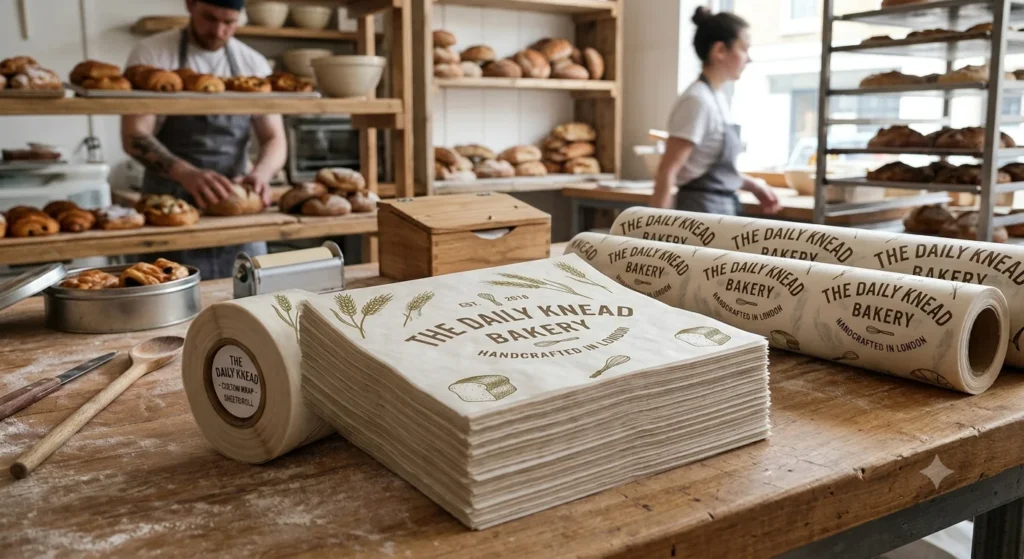
Butter paper is popular because it is lightweight, versatile, and available in customizable sizes. It can also be printed with logos, patterns, and brand colors, helping businesses maintain consistent packaging.
For bakeries and food retailers, custom butter paper can complement product boxes, paper bags, and other packaging materials.
What Is Deli Paper?
Deli paper is a type of food wrapping paper commonly used by delis, sandwich shops, restaurants, burger businesses, and takeaway outlets. It is often supplied in convenient sheets and can be used for wrapping or serving suitable food products.
Deli paper is especially popular in businesses that prepare food to order. It can make wrapping sandwiches, burgers, and other takeaway items more convenient while helping maintain a clean and organized presentation.
Common Uses of Deli Paper
Deli paper is frequently used for:
- Wrapping sandwiches and subs
- Wrapping burgers and rolls
- Lining food baskets and serving trays
- Separating deli products
- Wrapping selected bakery items
- Presenting takeaway snacks
- Packaging suitable prepared foods
The right type of deli paper depends on the food being handled. Some varieties are designed for general wrapping, while others have properties intended for handling greasy foods.
Benefits of Deli Paper
Deli paper offers convenience for busy food businesses. Its sheet format can make serving and wrapping quicker, particularly in restaurants and takeaway environments.
Custom deli paper also gives businesses a simple way to display their branding. Repeating logos, decorative patterns, and branded designs can make food presentation more recognizable.
What Is Greaseproof Paper?
Greaseproof paper is specially manufactured or treated to resist the penetration of grease and oil. It is commonly used for food packaging applications where ordinary paper may become stained or weakened by oily foods.
Restaurants, bakeries, fast-food businesses, and takeaway outlets often choose grease-resistant paper for products such as burgers, fries, pastries, and other foods that contain oil or fat.
Greaseproof paper should not automatically be considered waterproof, heatproof, or suitable for oven use. Those properties depend on the exact product specification.
Common Uses of Greaseproof Paper
Greaseproof paper can be used for:
- Wrapping burgers and sandwiches
- Packaging oily bakery products
- Lining suitable food trays
- Wrapping selected fried snacks
- Serving pastries and baked goods
- Packaging takeaway meals
- Separating greasy food items
Benefits of Greaseproof Paper
The main advantage of greaseproof paper is its resistance to grease penetration. This can help reduce visible oil stains and improve the appearance of food packaging.
Other benefits may include:
- Better presentation of greasy food products
- Convenient food wrapping and serving
- Customizable sheet sizes
- Opportunities for branded printing
- Compatibility with other food packaging materials, depending on specifications
Butter Paper vs. Deli Paper vs. Greaseproof Paper: What Is the Difference?
Although these papers are all used in food packaging, their intended applications and material properties can differ.
| Feature | Butter Paper | Deli Paper | Greaseproof Paper |
|---|---|---|---|
| Main purpose | General food and bakery wrapping | Wrapping and serving prepared foods | Handling foods containing grease and oil |
| Common users | Bakeries and food businesses | Delis, cafes, and restaurants | Restaurants, bakeries, and takeaway outlets |
| Typical applications | Bakery items and food separation | Sandwiches, burgers, and serving | Greasy foods and oily bakery products |
| Custom printing | Available | Available | Available |
| Custom sizes | Available | Available | Available |
| Grease resistance | Depends on grade | Depends on grade | Designed for grease resistance |
The most important point is that product names alone do not establish performance. Always review the manufacturer’s specifications, food-contact suitability, and intended use before selecting a paper.
Which Paper Is Best for Your Food Business?
The best paper depends on your menu, packaging process, and customer experience goals.
Best Paper for Bakeries
Bakeries may use butter paper for suitable wrapping, separating, and presentation applications. Greaseproof paper can be more appropriate for pastries and baked products containing butter, oil, or other fats.
If your bakery sells cookies, croissants, muffins, or pastries, consider the food’s texture, oil content, and packaging requirements before choosing a paper.
Best Paper for Burger Shops
Burger shops often need wrapping materials that can handle grease and support convenient takeaway packaging. Greaseproof paper may be a suitable option for burgers containing sauces, cheese, and oils.
Custom printed burger wrapping paper can also help create a recognizable brand experience.
Best Paper for Sandwich Shops
Deli paper is a common choice for sandwich shops because it is convenient for wrapping sandwiches, subs, and rolls. The required grease resistance depends on the fillings and sauces used.
Best Paper for Cafes
Cafes may use different paper types depending on their menu. Butter paper can be useful for suitable bakery items, deli paper for sandwiches, and greaseproof paper for selected greasy products.
A business offering several types of food may benefit from using more than one paper specification.
Custom Printed Food Wrapping Paper: Why Branding Matters
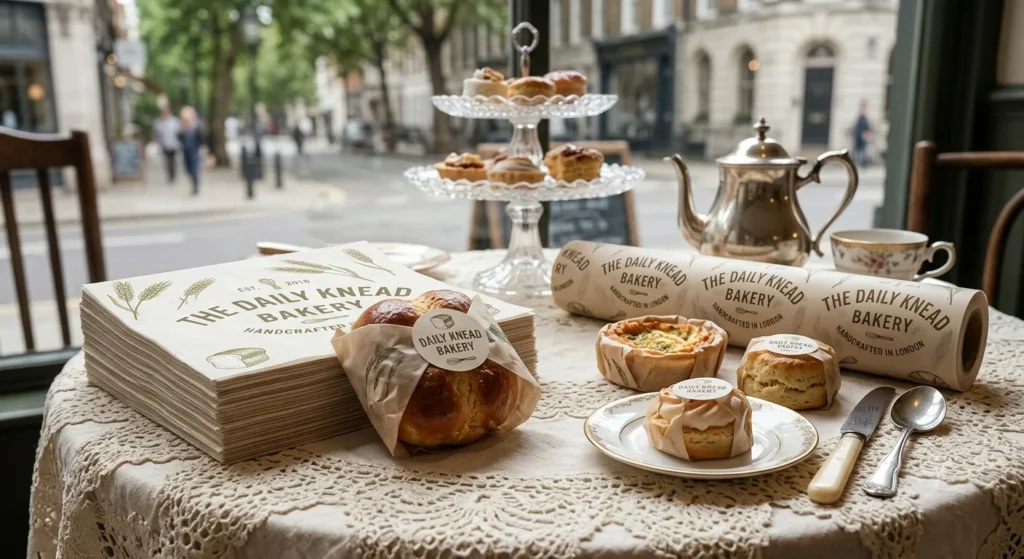
Food packaging is an opportunity to communicate your brand. Instead of using plain sheets, businesses can choose custom printed wrapping paper featuring their logo, brand colors, slogans, or repeating patterns.
Custom food wrapping paper helps create a consistent appearance across dine-in, takeaway, and delivery orders.
Custom Butter Paper with Logo
Custom Butter Paper with Logo allows bakeries, cafes, and restaurants to display their identity on food wrapping. A simple repeating logo or branded pattern can make even basic packaging look more coordinated.
Custom Deli Paper for Restaurants
Custom Deli Paper is useful for sandwich shops, burger outlets, and delis that want a recognizable presentation. Businesses can choose designs that complement their takeaway bags, food boxes, and other branded materials.
Custom Greaseproof Paper for Takeaway Businesses
Custom Greaseproof Paper combines grease-resistant functionality with branding opportunities. It can be printed with suitable designs to support the presentation of burgers, fries, pastries, and other greasy foods.
For all custom printed food-contact paper, make sure the inks and materials are appropriate for the intended application.
Custom Food Wrapping Paper Sizes
Food businesses use different paper dimensions depending on the products they serve. Selecting a suitable size can help reduce unnecessary waste and make wrapping more convenient.
Below are example dimensions that businesses can consider when planning custom food wrapping paper.
| Paper Size | Common Application |
|---|---|
| 6 × 6 inches | Small snacks and cookies |
| 8 × 8 inches | Small sandwiches and bakery items |
| 10 × 10 inches | Burgers and medium-sized sandwiches |
| 12 × 12 inches | Large burgers and food wrapping |
| 12 × 15 inches | Sandwiches, subs, and takeaway foods |
| 15 × 15 inches | Larger food items and serving baskets |
| 18 × 18 inches | Large trays and food presentation |
| 20 × 20 inches | Larger wrapping and serving requirements |
These are general examples, not fixed industry standards. Your ideal size depends on the dimensions of your food products and how you intend to wrap or serve them.
Understanding GSM for Food Wrapping Paper
GSM stands for grams per square meter. It measures the weight of paper and is one factor businesses consider when selecting food packaging materials.
A lower GSM generally indicates lighter paper, while a higher GSM indicates heavier paper. However, GSM alone does not determine grease resistance, strength, or food-contact suitability.
The paper’s composition, manufacturing process, coatings, and intended use also matter.
| GSM Range | General Paper Weight | Potential Applications |
|---|---|---|
| 25–30 GSM | Lightweight | Selected lightweight wrapping |
| 30–40 GSM | Light | General food presentation |
| 40–50 GSM | Medium | Selected wrapping and lining |
| 50–60 GSM | Heavier | Applications requiring a heavier paper feel |
These ranges are illustrative. The correct GSM should be selected according to the product specification and intended application rather than weight alone.
How to Choose the Right Food Wrapping Paper
Choosing the right paper requires more than comparing prices. Consider these important factors before placing an order.
1. Identify Your Food Products
Start by identifying what you will wrap or serve. A bakery selling cookies may need different paper from a burger restaurant handling oily products.
2. Consider Grease and Moisture
Think about the amount of oil, fat, sauce, or moisture in your food. If grease resistance is important, choose a paper specifically designed and tested for that purpose.
3. Select the Right Size
Measure your food products and consider how much paper is needed for wrapping or lining. Custom sizes can help improve convenience and reduce unnecessary material use.
4. Review Material Specifications
Ask your supplier about paper composition, coatings, printing inks, and food-contact suitability. If the paper will be exposed to heat or used in an oven, confirm that it is specifically rated for that application.
5. Choose Your Printing Design
Your wrapping paper can include your logo, brand colors, website, or a repeating pattern. Make sure the design remains clear and readable at the selected sheet size.
6. Consider Your Order Quantity
Estimate your regular packaging usage before ordering. Wholesale quantities may be suitable for businesses with consistent demand, while smaller orders can be useful when testing a new design or specification.
Wholesale Butter Paper, Deli Paper, and Greaseproof Paper
Food businesses that use wrapping paper regularly may prefer wholesale ordering to support their packaging inventory.
Unique Custom Packaging offers businesses the opportunity to discuss customized food wrapping paper based on their required sizes, material specifications, printing designs, and quantities.
Whether you need wholesale butter paper for a bakery, custom deli paper for a sandwich shop, or printed greaseproof paper for a takeaway restaurant, selecting the right specification is essential.
Before placing a bulk order, confirm:
- Paper type and material specification
- Sheet dimensions
- GSM and other performance requirements
- Printing design and colors
- Food-contact suitability
- Order quantity
- Production and delivery arrangements
Requesting samples or reviewing a print proof can help you check the paper and design before approving a larger production run.
Why Choose Unique Custom Packaging?
Unique Custom Packaging helps food businesses explore packaging solutions that support both practical requirements and brand presentation.
From custom butter paper to printed deli paper and greaseproof wrapping paper, businesses can discuss different options according to their products and packaging needs.
Our customization options can include:
- Custom sheet dimensions
- Branded logo printing
- Different design and color choices
- Paper specifications based on intended use
- Bulk and wholesale order options
Whether you run a small bakery, a growing restaurant, or an established food business, well-planned packaging can help create a consistent presentation across your products.
Final Thoughts
Butter paper, deli paper, and greaseproof paper all have useful roles in the food packaging industry, but they are not interchangeable in every application. Butter paper can support suitable bakery and general food wrapping needs, deli paper is commonly used for sandwiches and prepared foods, and greaseproof paper is designed for applications where resistance to oil and grease is important.
The right choice depends on your food products, paper specifications, sheet sizes, and packaging requirements. Custom printing adds another advantage by allowing businesses to display their brand identity directly on their wrapping materials.
If you are looking for custom butter paper, custom deli paper, or custom greaseproof paper, Unique Custom Packaging can help you explore options suited to your business. Choose the right paper, personalize your design, and create food packaging that combines practical use with professional brand presentation.